What's Damaging Your Grass? How to Identify Lawn Pests Before They Spread
November 15, 2026
A lush green lawn can turn patchy and brown seemingly overnight, and homeowners often blame drought or poor watering before they consider the real culprit. More often than you might think, the damage starts below the surface where insects feed on roots, blades, and thatch long before the signs become visible. Learning how to identify lawn pests early is the difference between a quick treatment and a full lawn renovation, which is why many residents call a trusted pest exterminator in Wausau at the first hint of trouble.
The frustrating part is that many lawn pests leave similar symptoms. A yellowing patch could mean grubs, chinch bugs, sod webworms, or simply a fungal issue. Knowing what to look for, and where, helps you respond before a small infestation becomes a yard-wide problem that spreads to your neighbors.
Lawn pests can cause damage quickly, and the Wisconsin growing season gives them time to develop and feed. A handful of grubs under one square foot of turf may seem harmless, but larger populations can chew through roots until entire sections of grass lift up like loose carpet. By the time most people notice the damage, the insects may already have caused significant damage beneath the surface.
Catching the problem early also protects the rest of your landscape. Healthy grass with a strong root system resists disease and tolerates foot traffic, drought, and temperature swings far better than a stressed lawn. When pests weaken those roots, your turf becomes vulnerable to a cascade of other issues. That is why understanding how to identify lawn pests should be part of every homeowner's seasonal routine, not just a reaction after the damage is done.
Several insects are responsible for the majority of lawn damage across Wausau and the surrounding areas. Each one has distinct feeding habits and leaves behind clues that help you narrow down the source.
White grubs are the larvae of beetles such as June bugs and Japanese beetles. They live in the soil and feed on grass roots, creating irregular brown patches that feel spongy underfoot. Because the roots are severed, affected turf often peels back easily. You may also notice increased digging from skunks, raccoons, or birds hunting the grubs. The University of Wisconsin Extension's guide to white grub identification and control explains these warning signs and when treatment is necessary.
Chinch bugs prefer hot, dry areas and sunny spots along driveways and sidewalks. They feed on grass blades, causing the surrounding turf to yellow and die. Chinch bug damage is frequently mistaken for drought stress, so it spreads unchecked when homeowners simply add more water.
Sod webworms are the larvae of small moths you might see fluttering over the lawn at dusk. They chew grass blades near the soil line, leaving small, ragged brown patches that grow larger over time. A telltale sign is silky webbing in the thatch layer, visible in the early morning dew.
Billbugs tunnel into grass stems and feed on the crown of the plant. Damaged areas often look like the lawn is suffering from heat, and a simple tug test will pull the stem free, revealing a sawdust-like residue left behind by the feeding larvae.
The most reliable way to diagnose a problem is to read the symptoms in combination rather than relying on a single clue. Brown patches alone are not enough, but brown patches paired with spongy soil, peeling turf, and visible larvae point clearly to grubs. Learning how to identify lawn pests comes down to inspecting both the grass and the soil beneath it.
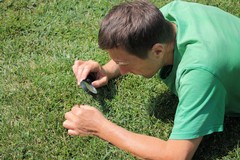
Start with a straightforward field test. Mix a gallon of water with a small amount of dish soap and pour it over a suspect area roughly two feet square. Within a few minutes, certain surface-feeding insects, including sod webworms, may rise to the surface, irritated by the solution. This soap flush method for identifying sod webworms can help reveal hidden larvae. For grubs, dig up a one-foot section of turf a few inches deep and count the larvae you find. More than five to ten in that small area can signal a population worth investigating, depending on the grub species and the lawn's condition.
Timing and location also tell a story. Damage that appears along sunny edges in midsummer leans toward chinch bugs, while widespread spongy patches in late summer and fall suggest grubs reaching their feeding peak. Webbing in the morning dew points to sod webworms. When you combine these observations, the guesswork largely disappears.
Once you confirm the type of pest, acting quickly keeps the damage contained. A thick, well-maintained lawn is your first line of defense because dense grass crowds out space for insects to establish themselves. Mowing at the proper height, avoiding overwatering, and dethatching when the thatch layer gets too deep all reduce the conditions pests rely on to thrive.
Overwatering deserves special attention, since soggy soil and heavy thatch can contribute to lawn health problems. Deep, infrequent watering encourages roots to grow downward, making the entire lawn more resilient. Proper fertilization supports that recovery, but excessive nitrogen can encourage weak growth, so balance matters. If you suspect a broader insect issue around your home, our guide on protecting your property from seasonal invaders pairs well with lawn care, and you can always reach out through our pest control services for a tailored plan.
Even with excellent lawn care, some infestations require professional treatment to stop them from spreading to adjacent sections or neighboring yards. The larvae of many lawn pests live underground where surface sprays never reach, so targeted applications and correct timing make all the difference. Knowing how to identify lawn pests is only half the battle; applying the right solution at the right moment is what actually protects your investment.
If you have tried the soap test, adjusted your watering, and still see expanding brown patches, it is time to bring in experienced help. A professional inspection confirms the exact species, measures the severity, and determines whether the damage can be reversed or needs reseeding. This precision prevents wasted money on treatments that target the wrong insect.
We serve homeowners throughout central and northern Wisconsin, and our team understands the regional pests that threaten local properties season after season. Whether you need help in Wausau or you are searching for dependable residential pest control services in Rhinelander, WI, we tailor every treatment to the pest and the property rather than applying a one-size-fits-all approach.
Your lawn is one of the most visible parts of your home, and healthy grass starts with knowing how to identify lawn pests before they take hold. Watch for spongy patches, test suspicious areas, and keep your turf dense and properly watered to discourage infestations. When the signs point to a pest problem you cannot manage alone, contact our team for a thorough inspection and a treatment plan built to keep your grass green and your yard protected.
November 15, 2026
November 3, 2026

November 1, 2026
October 17, 2026