Why Are There Ants in My Bathroom? Hidden Attractants and How to Eliminate Them
November 17, 2026
Flipping on the bathroom light to find a trail of tiny ants marching across the tile is one of the more puzzling surprises a homeowner can face. The kitchen makes sense, after all, that is where the crumbs and spills live. But the bathroom seems like an unlikely dining room for an insect. If you have found yourself asking, "why are there ants in my bathroom?" you are far from alone. It is a common call we hear when homeowners reach out for pest control in Wausau, and the answer usually comes down to a few hidden attractants that are easy to overlook.
The good news is that bathroom ant problems are almost always solvable once you understand what is drawing them inside. Below, we will walk through the reasons ants target bathrooms, the specific conditions that invite them, and the practical steps you can take to show them the door for good.
Ants need three basic things to thrive: water, food, and shelter. While the kitchen tends to supply plenty of food, the bathroom is one of the most reliably moist environments in the entire house. For ants, consistent access to water can be just as valuable as a dropped cookie, and sometimes even more so during dry stretches of weather.
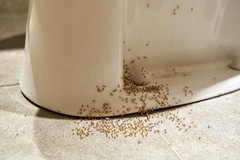
Moisture collects in bathrooms in dozens of small ways. Condensation forms on cold pipes, water pools around the base of the toilet, and droplets linger in the sink and shower long after you have finished. Leaky plumbing behind walls or under cabinets creates a steady, hidden water source that ants can detect even when you cannot see it. Once a few scout ants find that reliable supply, they leave a chemical trail that guides the rest of the colony straight to it.
When people ask why are there ants in my bathroom, they often assume the room offers nothing to eat. In reality, bathrooms hold more food-like material than most of us realize. Many personal care products are surprisingly appealing to ants, which are drawn to sugars, oils, and sweet-smelling ingredients.
Think about everything that ends up on your bathroom counter. Toothpaste residue left on the sink, drips from sweetened mouthwash, and the sticky film from soaps, lotions, and shampoos can all attract foraging ants. Hair, dead skin cells, and the organic matter that gathers in drains may also provide food sources for certain species. Even the trash can holds tissues, cotton swabs, and wrappers carrying traces of something edible. To an ant colony, a neglected bathroom bin can be a genuine buffet.
Finding the attractant is only half the puzzle. The other half is figuring out how the ants are entering in the first place. Bathrooms are full of entry points because of all the plumbing and venting that runs through the walls and floors. The gaps around pipes where they pass through drywall or flooring are classic highways for ants, offering a direct route from the wall cavity to your counter.
Other common access points include cracks in grout and caulk, gaps beneath baseboards, and tiny openings around windows and exhaust fans. In older homes especially, settling and normal wear create fissures that ants exploit with ease. Some species, such as carpenter ants, are even drawn to wood that has been softened by chronic moisture, which means a damp bathroom can become a nesting site rather than just a watering hole. That is one reason persistent ant activity should never be dismissed as harmless.
Once you understand what is attracting them, eliminating bathroom ants becomes a matter of removing their resources and sealing their routes. Start by addressing moisture, since water is usually the primary draw. Fix dripping faucets and running toilets promptly, run the exhaust fan during and after showers, and wipe down wet surfaces so standing water does not linger. If you suspect a hidden leak behind a wall or under the vanity, have it inspected before it causes both pest and structural trouble.
Next, cut off the food supply and close the doors they use to get in. A consistent cleaning routine and some targeted sealing go a long way:
Resist the urge to simply spray every ant you see. Visible ants are only a small fraction of the colony, and surface sprays can interfere with more effective control methods. The University of Minnesota Extension's guidance on indoor ant control emphasizes identifying the species and addressing the colony rather than simply killing visible workers. Removing attractants and entry points addresses the root of the problem rather than the symptom you happen to notice on a given morning.
Sometimes a thorough cleaning and a tube of caulk are enough to settle a minor ant issue. Other times the colony is well established, hidden deep within a wall, or fed by a moisture problem you cannot easily reach. If ants keep returning no matter how clean you keep the room, or if you spot the larger carpenter ants that can damage wood, it is time to bring in a professional who can locate the nest and treat it at the source.
Our team provides professional pest control services, and we approach bathroom ant problems by identifying the species, tracing the trails back to the colony, and treating in a way that actually breaks the cycle. Correct identification matters, because the strategy that works for odorous house ants is different from the one needed for carpenter ants. A trained technician can also spot the moisture issues and entry points that are easy for homeowners to miss.
Homeowners outside the immediate metro benefit from the same approach. If you are dealing with recurring ants and want residential pest control services, the underlying principles are identical: remove the water, remove the food, seal the gaps, and treat the colony directly.
So the next time you catch yourself wondering why are there ants in my bathroom, remember that the room offers everything a colony is looking for, from steady moisture to the overlooked residue of everyday toiletries. By tackling leaks and condensation, keeping surfaces clean, and sealing the small openings around pipes and fixtures, you remove the incentives that bring ants indoors. When the problem persists or feels bigger than a quick fix, reaching out for expert help is the surest path to a lasting solution. Contact Marathon Pest Control for an inspection, and we will help you reclaim your bathroom and keep it ant free throughout the seasons.
November 17, 2026
November 15, 2026
November 3, 2026

November 1, 2026